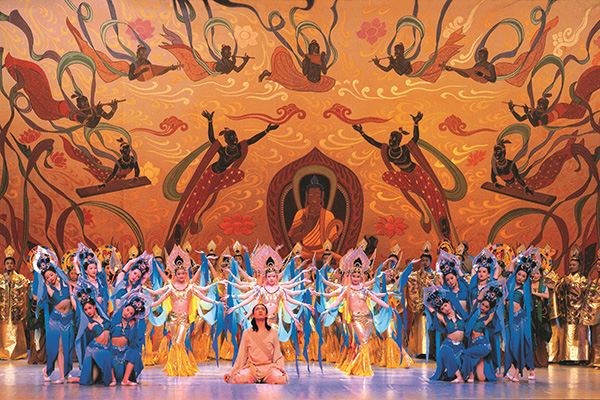
Dance Drama 'Dream of Dunhuang'
Introduction
"Dream of Dunhuang" is a monumental dance drama composed by the Lanzhou Opera House. It premiered at the Chinese Theater in Beijing on April 24, 2000, marking a significant moment in the realm of Chinese performing arts. The drama has been celebrated for its portrayal of the profound culture of the Dunhuang Mogao Grottoes through the medium of Chinese folk dance.
The production is often referred to as "movable Dunhuang" due to its dynamic representation of the rich cultural heritage of the Mogao Grottoes. Over the years, "Dream of Dunhuang" has not only captivated audiences in China but has also been performed over 1,300 times globally, earning it a place among the most acclaimed original Chinese dance dramas.
Background
The dance drama "Dream of Dunhuang" is deeply rooted in the cultural and historical significance of the Dunhuang Mogao Grottoes. These grottoes, located in Gansu province, are renowned for their ancient Buddhist art and frescoes, dating back to the fourth century. The Mogao Grottoes have long been a symbol of the intersection of various cultures, serving as an important hub on the Silk Road. The artistic legacy of the grottoes, with its rich tapestry of murals and sculptures, serves as the historical backdrop for the drama, providing a canvas for the expression of stories that resonate with the spiritual and cultural history of China.
The creation of "Dream of Dunhuang" was undertaken by the Lanzhou Opera House, an institution renowned for its dedication to preserving and promoting traditional Chinese performing arts. The drama was conceived as an artistic endeavor to bring the stories and cultural essence of the Mogao Grottoes to life through dance. Since its premiere, the drama has undergone various adaptations and improvements, ensuring its continuous appeal and relevance to audiences worldwide.
Plot Summary
"Dream of Dunhuang" unfolds a narrative that intertwines the spiritual and artistic essence of the Dunhuang Mogao Grottoes. The storyline captures the journey of artistic creation, spirituality and human connection, drawing inspiration from the frescoes and sculptures that adorn the grottoes. Through a series of vivid scenes and sequences, the drama transports the audience to a realm where ancient art and contemporary dance converge. The plot weaves together tales of devotion, creativity and cultural exchange, capturing the imagination of audiences with its poignant storytelling and evocative imagery.
Artistic Features
The dance techniques in "Dream of Dunhuang" are characterized by their fluidity and grace, embodying the essence of traditional Chinese folk dance. The performers employ a wide range of movements, from intricate footwork to sweeping arm gestures, creating a visual harmony that mirrors the artistic style of the Dunhuang frescoes. The choreography is meticulously crafted to evoke the spiritual themes and cultural motifs of the Mogao Grottoes, with dancers executing each movement with precision and expressiveness.
The stage design of "Dream of Dunhuang" is a visual spectacle that complements the thematic elements of the drama. Drawing inspiration from the rich colors and intricate patterns of the Dunhuang murals, the set design incorporates vibrant backdrops and elaborate props that transport the audience into the ancient world of the grottoes. The use of lighting and visual effects further enhances the immersive experience, highlighting the ethereal beauty and mystique of the Dunhuang art.
The music of "Dream of Dunhuang" is an integral part of the drama, featuring a blend of traditional Chinese instruments and contemporary compositions. The score, with its melodic and rhythmic diversity, underscores the emotional depth and narrative arc of the performance. The costumes are meticulously designed to reflect the historical and cultural authenticity of the Dunhuang era, with intricate embroidery and flowing fabrics that enhance the visual appeal and thematic resonance of the dance drama.








